
For your better understanding, let’s take the example of our favorite fictitious company, Slackr. If you’re interested in checking its live financial model within Sturppy, you can view it here. You can calculate ARR manually, which can annual recurring revenue take a while and is prone to mistakes.
- Annual recurring revenue is an essential metric for any business with a subscription model.
- With subscription plans at various price points, Netflix uses ARR to assess the revenue impact of upgrades, downgrades, and customer churn.
- In this article, we’ll discuss why ARR is an important metric for SaaS companies, the different types of ARR you need to know, and how to calculate them.
- Larger companies often use dedicated ARR snowball models in spreadsheet form to break down recurring revenue changes by component (new, expansion, churn).
- This information helps you understand areas of the revenue profile that are performing well or poorly.
- This stability is essential for investors and stakeholders looking for consistent revenue generation.
- When businesses that use recurring billing systems experience major economic downturns, recurring revenue can protect them.
Focusing on Customer Retention

CARR can be calculated for shorter spans too—just substitute “quarter” or “month” for “year” in your calculations to get a closer look at your revenue commitments. A major spike in June 2021 – and the relatively high churn in July – provide an account for the first bump in the assets = liabilities + equity previous plot. It also looks like there was a good increase in new accounts from June to November 2022 before moving back to a new baseline. However, there doesn’t seem to be an appreciable change in the net new MRR, as churn and downgrades have also increased. We can see from the plot that the total MRR seems to increase at a roughly linear rate.

Calculating ARR: A Step-by-Step Guide
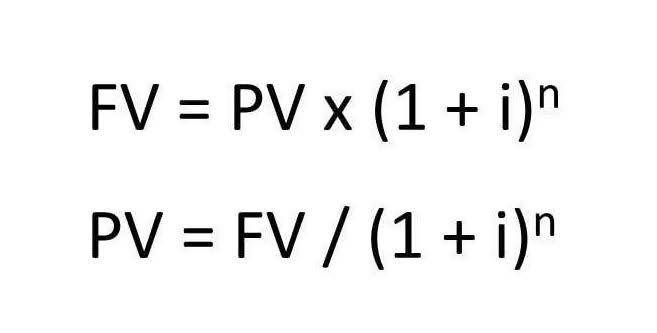
To calculate the ARR of the SaaS provider on this particular customer, we would divide the contract value Retained Earnings on Balance Sheet ($50,000) by the number of years (4), which comes out to an ARR of $12,500 per year. The most important part isn’t which exact formula is used — it’s consistency. A business should clearly define how it calculates ARR and consistently apply that method across all reports and presentations.
Shopify Performance Optimization: Ensuring Speed and Efficiency
- Service and support agreements are a type of recurring revenue model where a business provides ongoing services to customers in exchange for a recurring fee.
- Startups with a high ARR are considered more valuable than those with a low ARR and a predictable and stable revenue stream.
- It is usually graphed on a curve alongside the customer acquisition costs payback period to show how long each customer’s acquisition costs will measure against their total lifetime value.
- Investing in Shopify development support ensures that your store is always running at its best, providing a better experience for both customers and store owners.
- Revisiting your SaaS pricing strategy is a smart way to stay aligned with your value proposition and competitive landscape.
At the same time, revenue encompasses all company income sources, including one-time sales, services, and other non-recurring revenue streams. On the other side, the revenue run rate is a projection of the annual revenue based on the current pace of revenue generation. Churn, or customer attrition, is a major challenge for businesses with recurring revenue models. To minimize churn, it’s crucial to identify the root causes and take proactive measures to address them.

With AI-powered features such as product recommendations, predictive analytics, and automated content creation, Shopify merchants can stay competitive in a fast-paced digital landscape. The platform’s commitment to innovation means that your store will continue to benefit from new capabilities and tools designed to drive conversion and efficiency. Another factor that contributes to Shopify’s long-term scalability is its global reach.
- Recurring revenue models offer this consistent cash flow, supporting businesses as they grow and scale.
- It looks at how a company might earn money in the future and its overall value.
- When a user cancels their subscription, their MRR contribution is dropped in the month their next payment would have occurred.
- By analyzing ARR per employee, you can gauge their productivity and efficiency.
- To find ARR, you multiply the average revenue per account by the number of years a customer will stay.
